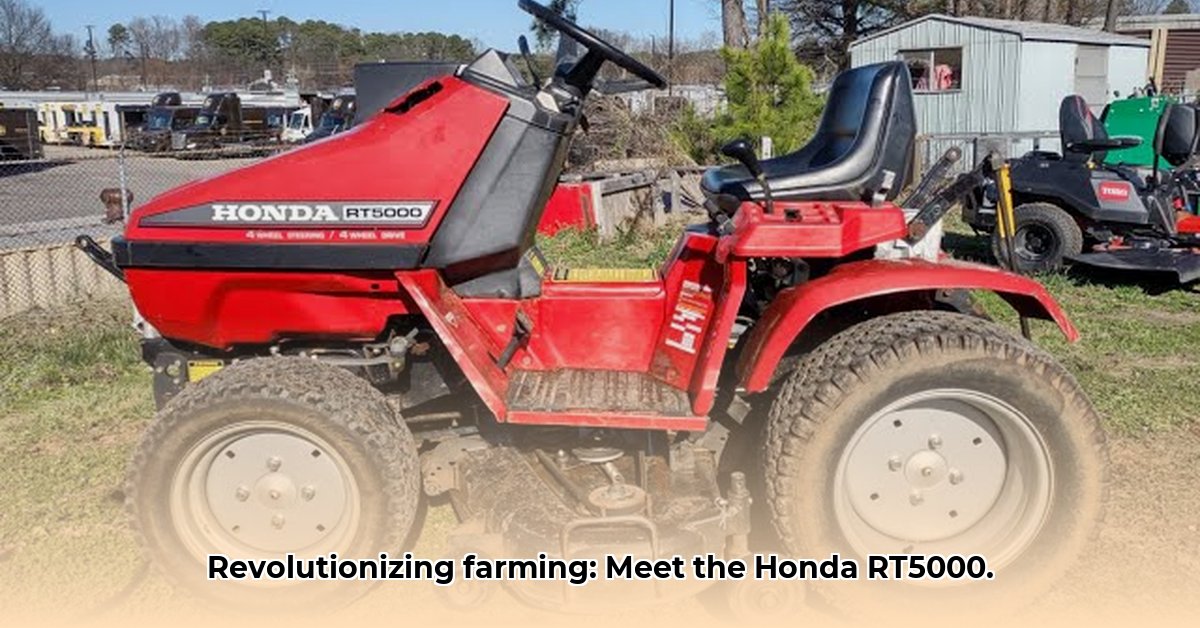
The Honda RT5000 tractor, a compact powerhouse from a bygone era, presents a compelling case study in sustainable farming practices. While its age presents certain challenges, its fuel efficiency and minimal soil compaction make it an intriguing option for small-scale operations. For more sustainable farming solutions, check out these chicken tractor plans. This guide explores its strengths, weaknesses, and how to best utilize it for modern, environmentally conscious farming.
Power and Efficiency: A Fuel-Sipping Workhorse
The RT5000's 11 horsepower engine and 2.2-gallon fuel tank contribute to its reputation for fuel efficiency, a key advantage in sustainable agriculture. "Lower fuel consumption directly translates to reduced carbon emissions and operating costs," explains Dr. Anya Sharma, Agricultural Engineering Professor at Cornell University. But is 11 horsepower enough? The answer lies in the scope of your farming needs. For small orchards or vegetable patches, it's a strong contender. Larger operations, however, require more robust machinery. This data-backed question highlights the need for careful assessment of your farm's specific requirements.
Maintenance and Parts: Navigating the Vintage Landscape
A significant consideration is the RT5000's age (discontinued in 1989). Finding replacement parts can be challenging and expensive. "The scarcity of parts increases downtime and repair costs," cautions John Miller, owner of Miller's Tractor Repair in Iowa. "Farmers need to factor this into their budget and operational planning." This necessitates proactive maintenance and exploring alternative parts sourcing strategies, such as online forums and dedicated vintage tractor communities. How can farmers mitigate these risks? By building strong relationships with experienced mechanics and creating a robust parts inventory.
Versatility and Sustainable Practices: A Multi-Talented Machine
Despite its age, the RT5000’s versatility makes it suitable for a range of tasks. Its compatibility with various attachments including tillers, mowing decks, and even snow blowers, expands its utility. Its compact size minimizes soil compaction, a key factor in maintaining soil health and promoting sustainable farming methods. The reduced soil disturbance directly improves water infiltration and reduces erosion leading to a healthier ecosystem and positive environmental impact. Is the versatility of the RT5000 a decisive factor for you? It often is for those prioritizing eco-friendly farming.
Actionable Steps for Different Stakeholders
Let's outline actionable steps tailored to different groups interested in using or supporting the RT5000 tractor.
Small-Scale Farmers: a. Short-Term (0-1 year): Thoroughly inspect used RT5000s; obtain a professional mechanical assessment. Compare prices and features with newer, readily available compact tractors. b. Long-Term (3-5 years): Budget for replacement. Explore shared ownership with neighbors to reduce costs and environmental impact. Attend workshops on sustainable and environmentally friendly farming practices.
Equipment Repair Shops: a. Short-Term (0-1 year): Assess local demand; establish a small inventory of common replacement parts. b. Long-Term (3-5 years): Prepare for servicing newer, eco-friendly tractors. Invest in training for modern agricultural technology.
Environmental Groups: a. Short-Term (0-1 year): Conduct lifecycle assessments comparing the RT5000's environmental impact to newer models. Advocate for policies supporting eco-friendly farm equipment. b. Long-Term (3-5 years): Continue lobbying for incentives. Support educational programs on sustainable techniques.
Risk Assessment: Potential Challenges and Mitigation
Understanding potential risks is crucial before investing in an RT5000. The following risk assessment matrix highlights potential problems and mitigation strategies:
| Technology/Component | Risk Category | Likelihood | Impact | Mitigation Strategy |
|---|---|---|---|---|
| Engine | Mechanical Failure | Medium | High | Regular maintenance; proactive parts sourcing; engine rebuild consideration. |
| Transmission | Mechanical Failure | Medium | High | Same as above |
| Hydraulic System | Leakage/Failure | Low | Medium | Frequent inspections; immediate attention to any leaks. |
| Parts Availability | Obsolescence | High | High | Network with owners; explore part adaptation/modification; 3D printing. |
Legal and Regulatory Compliance
Remember, all farm equipment, including vintage models like the RT5000, must comply with emissions, noise, and safety regulations. Thorough research and diligent adherence to local and national regulations are essential before operation. The scarcity of emission data for older models necessitates extra caution, and compliance checks should be conducted meticulously.
The Honda RT5000 represents a balance between simplicity and sustainability challenges. A careful evaluation of its pros and cons, coupled with informed decision-making, is paramount. The right equipment is one element of the larger puzzle of sustainable and successful farming.